
Winter walks can be hard on a dog’s paws. Snow packs between the toes, road salt dries and stings the pads, and de-icing chemicals can make dogs ill if they lick them off. The good news is that a few simple habits keep paws safe. This guide shows you how to protect dog paws in winter, with a routine you can start today.
Why winter is hard on dog paws
Cold, dry air and chilly rain, sleet and snow can leave paws chapped and skin itchy and flaking, according to the ASPCA. Walking on salted or treated surfaces adds more risk, particularly because dogs lick their paws.

- Ice balls: snow and ice clump between the toes and pull on the fur, which is uncomfortable and can cause small cuts.
- Road salt: dries the pads and can sting cracked skin.
- De-icing chemicals: can make dogs ill if licked off the paws.
- Antifreeze: deadly for dogs, even from a small spill.
- Cold, dry air: leaves pads chapped, flaky and sore.
- Frostbite: a risk in very cold weather, especially on toes and pads.
VCA Animal Hospitals notes that salt-based de-icers can be toxic if licked and are drying to paw pads and the skin between the toes.
A simple winter paw care routine

Before the walk
- Trim long fur between the toes. Less fur means less ice builds up. The ASPCA suggests trimming long-haired dogs to cut down on clinging ice balls and salt crystals. A groomer can help if you’re unsure.
- Apply a paw balm. Choose a balm made for dogs, and one that is safe if licked. Rub it into the pads before you go out. Ask your vet if your dog has sensitive skin.
- Or use booties. Booties are the most complete protection against salt, ice and sharp objects hidden under snow.
- Keep it short. If it’s too cold for you, it is probably too cold for your dog, as the ASPCA puts it.
During the walk
- Avoid heavily salted paths where you can. A park or snowy field is often gentler on paws than a treated pavement.
- Stop your dog licking puddles, snow melt or the ground.
- Watch for limping, lifting paws or stopping. These can mean cold, ice between the toes or sore pads.
- Keep your dog on a lead in snow. Dogs can lose their scent trail in the snow and get lost, and more dogs go missing in winter, so make sure your dog wears an ID tag.
After the walk
- Wipe or rinse the paws and belly to remove ice, salt and chemicals. The ASPCA recommends washing and drying your pet’s feet and stomach after each walk.
- Dry well between the toes. Damp paws can get sore.
- Check for cracks, redness, swelling or ice between the pads.
- Don’t let your dog lick off residue before you’ve cleaned it.
Keep a towel by the door so it becomes a habit. The ASPCA also suggests bathing your dog as little as possible during cold spells.
Dog booties: do they help?
Booties protect paws from salt, ice and sharp objects, and many dogs wear them happily after some practice. Look for:
- A snug but not tight fit. Measure your dog’s paw width and check the maker’s size chart.
- Non-slip treads for ice.
- Fastenings that stay on, but don’t cut off circulation.
- Breathable, waterproof material.
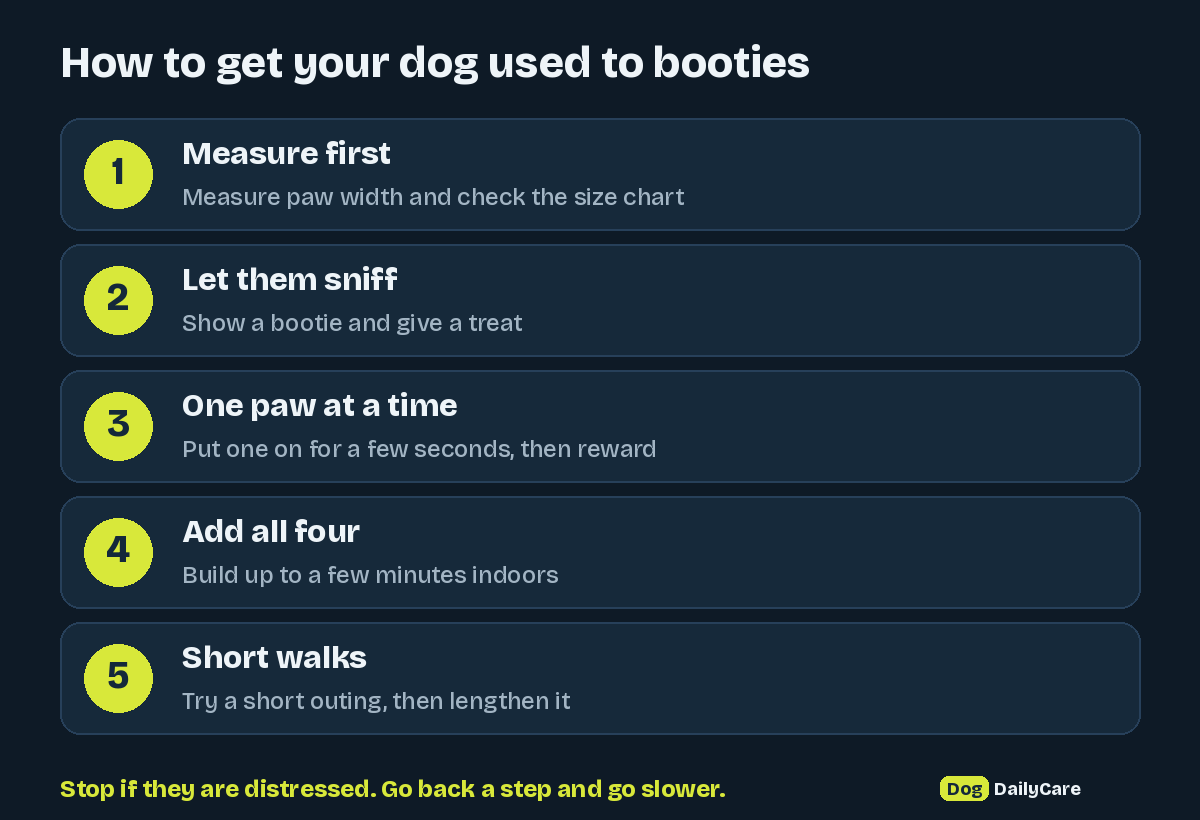
How to get your dog used to booties
- Measure first and check the size chart.
- Let them sniff a bootie and give a treat.
- Put one on for a few seconds, then reward and remove it.
- Add all four and build up to a few minutes indoors.
- Try a short walk, then lengthen it.
Stop if your dog is distressed, go back a step, and move more slowly. Take them off after the walk, and check that paws are dry.
Paw balm or petroleum jelly?
A balm creates a thin barrier against salt and dry air, and helps soothe dry pads. Choose a product made for dogs, and keep in mind that dogs lick their paws, so a lick-safe formula is best. Apply a thin layer, and wipe off any excess. Don’t use a balm instead of cleaning, because you still need to remove salt and chemicals after the walk.
Be careful with antifreeze and ice melt
- Antifreeze is lethal for dogs and cats. Clean up any spills at once and store it where your dog can’t reach it.
- Choose dog-safe ice melt on your own steps and paths, and avoid rock salt where you can.
- Keep chemicals out of reach, and never let your dog drink from puddles on driveways.
If you think your dog has swallowed antifreeze or another poison, contact your vet or a poison helpline immediately. In the US, ASPCA Poison Control is at (888) 426-4435. In the UK, call your vet straight away. For more winter advice, see Dogs Trust.
Signs of frostbite and other paw problems
In very cold weather, watch for pale, grey or blue skin on the toes, ears or tail that feels cold and hard, and later redness, swelling or blisters. Frostbite needs a vet’s help, so don’t rub the area. Move your dog somewhere warm and call your vet.
When to see your vet
Contact your vet if your dog has:
- Bleeding, deep cracks or open sores on the pads
- Limping that doesn’t go away after you’ve removed any ice
- Constant licking or chewing of the paws
- Swelling, redness or a bad smell from the paws
- Vomiting, drooling or unusual behaviour after a walk, which can mean they’ve licked something harmful
- Signs of frostbite
Common questions
Do dogs need boots in the snow?
Not always. Many dogs manage with short walks, clean-up and balm. Boots help most where there’s heavy salt or ice, or if your dog has sensitive paws.
Can I use Vaseline on my dog’s paws?
Some owners use petroleum jelly as a barrier, but it can be slippery and dogs may lick it off. A lick-safe balm made for dogs is usually a better choice, and your vet can advise.
How cold is too cold for dog walks?
It depends on the breed, size, age and coat. Small, short-haired, young and older dogs feel the cold sooner. A good rule is that if it’s too cold for you, it’s too cold for your dog.
Should I bathe my dog less in winter?
The ASPCA suggests bathing as little as possible during cold spells, so rely on paw and belly wipe-downs instead.
How can I protect my dog’s paws from salt without boots?
Use a balm, avoid salted paths where you can, keep walks short, and wash and dry paws straight after each walk.
A final word
A few minutes of care before and after each winter walk protects your dog’s paws and keeps walks comfortable. This guide is general information and does not replace veterinary advice.
Next, see our guides on dog exercise and dog health and vaccines.