
Exercise keeps your dog fit, helps control weight and burns off the energy that can turn into chewing, barking and restlessness. How much is right depends on your dog’s age, breed, size and health. This guide helps you work out a sensible routine and keep it safe.
How much exercise does a dog need?
There is no single number for every dog. This is a rough guide for healthy adult dogs, and your vet can tell you what suits yours.
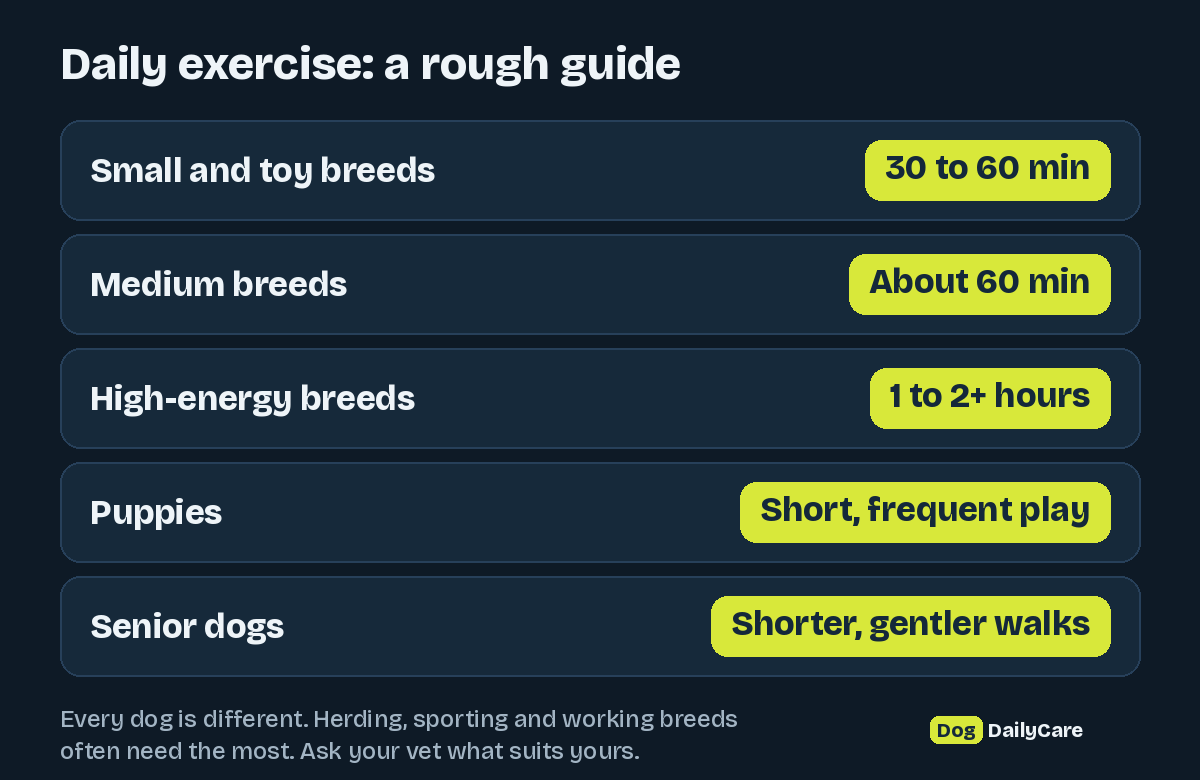
- Small and toy breeds: about 30 to 60 minutes a day
- Medium breeds: about an hour a day
- High-energy breeds (many herding, sporting and working breeds): one to two hours or more
- Puppies: short, frequent play sessions rather than long walks
- Senior dogs: shorter, gentler walks, adjusted to their comfort
Flat-faced breeds, such as Pugs and Bulldogs, can struggle to breathe in heat or during hard exercise. They do best with gentle, shorter activity.
Signs your dog is not getting enough exercise
- Destructive chewing or digging
- Barking, whining or restlessness
- Weight gain
- Pulling hard on the lead or being hard to settle at home
Signs of too much exercise
- Limping or stiffness after activity
- Lagging behind on walks, or lying down and refusing to continue
- Heavy panting that doesn’t settle
- Extreme tiredness or reluctance to go out the next day
If you see these, scale back and talk to your vet.
Exercise for puppies
Puppies have lots of energy, but their bones and joints are still growing. Keep it short, fun and varied.
- Choose several short play sessions and walks through the day.
- Avoid long runs, repeated jumping and hard, forced exercise on pavement while they grow.
- Let them rest. Puppies sleep a lot, and they need it.
- Ask your vet when it’s safe to go to public places, because puppies are not fully protected until their vaccinations are complete.
Exercise for senior dogs
Older dogs still need to move, because it keeps joints flexible and muscles strong.
- Go for shorter, more frequent walks at a gentle pace.
- Choose soft surfaces such as grass where possible.
- Watch for stiffness, slowing down or trouble getting up, and tell your vet.
- Swimming and gentle play can be good low-impact options.
Exercise ideas beyond the walk
Mental exercise tires a dog out as much as physical activity.
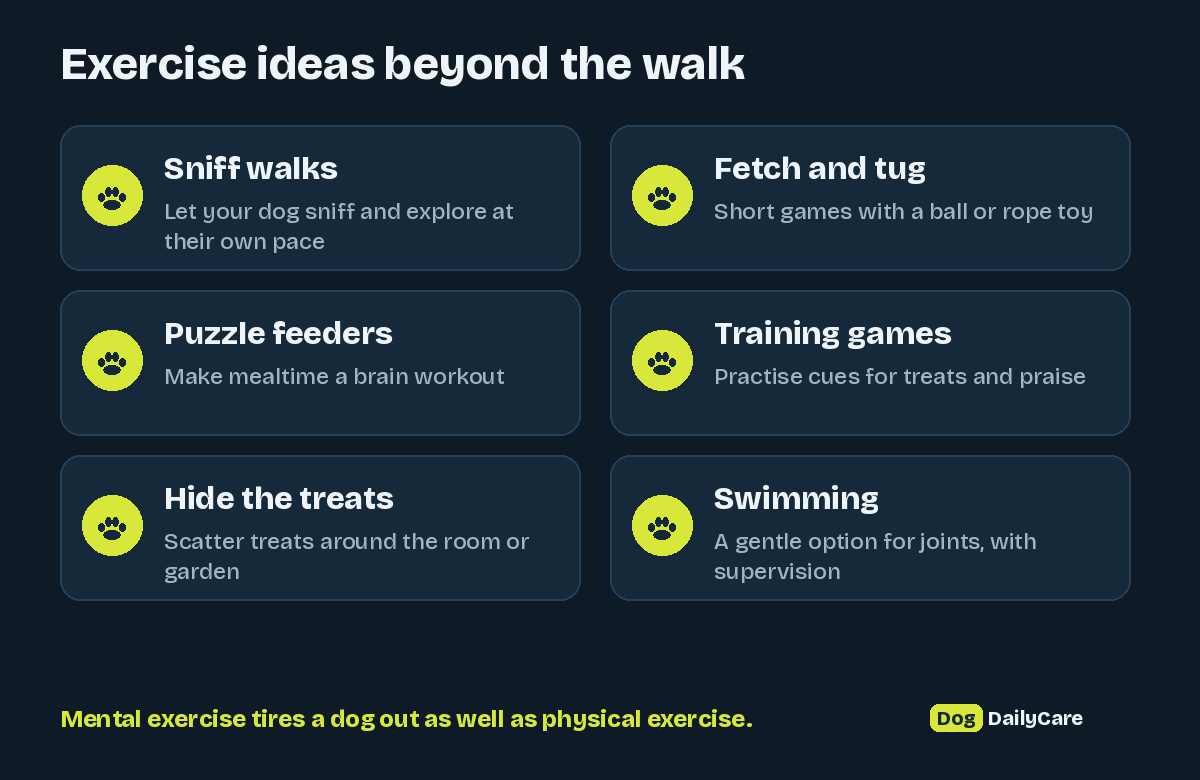
- Sniff walks: let your dog sniff and explore at their own pace.
- Fetch and tug: short games with a ball or rope toy.
- Puzzle feeders: make mealtime a brain workout.
- Training games: practise cues for treats and praise.
- Hide the treats: scatter treats around the room or garden.
- Swimming: a gentle option for joints, with supervision.
On busy days, ten minutes of training or a puzzle toy can do more than you’d expect.
Exercising in hot weather
Dogs cool themselves mainly by panting, and they can overheat quickly.
Stay safe
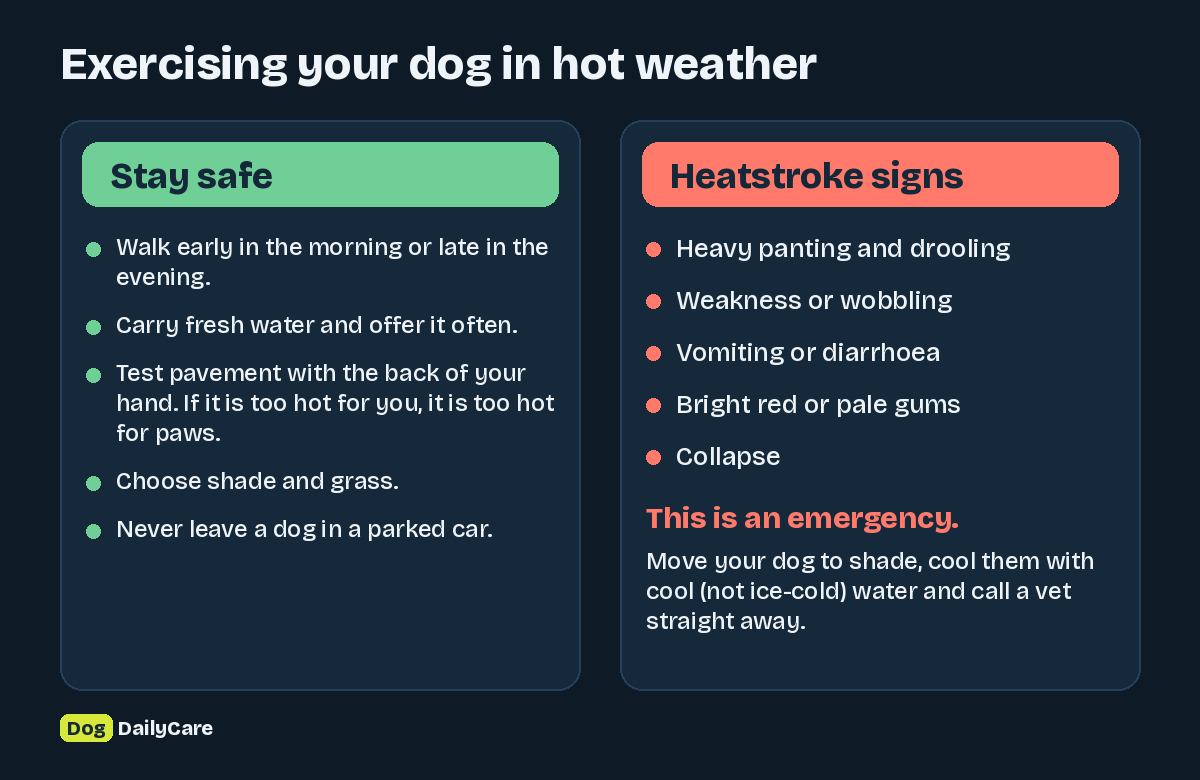
- Walk early in the morning or late in the evening.
- Carry fresh water and offer it often.
- Test the pavement with the back of your hand. If it’s too hot for you, it’s too hot for your dog’s paws.
- Choose shade and grass.
- Never leave a dog in a parked car, even for a few minutes.
Signs of heatstroke
Heavy panting and drooling, weakness or wobbling, vomiting or diarrhoea, bright red or pale gums, and collapse.
What to do: heatstroke is an emergency. Move your dog to shade, cool them with cool (not ice-cold) water, and call a vet straight away.
Cold and wet weather
Short-haired, small and older dogs may feel the cold. A coat can help, and you should dry your dog and their paws after wet walks. Wipe paws if there is salt or chemicals on the ground, because they can irritate skin and are harmful if licked.
Common questions
Is a walk around the garden enough?
For most dogs, no. Walks give mental stimulation as well as exercise, because of the smells, sights and sounds.
Should I exercise my dog before or after meals?
Avoid hard exercise right before or after a large meal. Ask your vet for guidance, especially for deep-chested breeds.
How long should I walk my dog each day?
Start with the guide above, then watch your dog. A dog that is relaxed and settled at home after exercise is usually getting about the right amount.
Can I take my dog running with me?
Not as a puppy while their joints are developing, and only gradually for adult dogs. Build up slowly and check with your vet first, particularly for flat-faced breeds.
When to talk to your vet
Speak to your vet if your dog suddenly loses interest in exercise, limps, pants more than usual, coughs or tires quickly, or if you want to start a new activity such as running. This guide is general information and does not replace veterinary advice.
Next, see our guides on feeding your dog and senior dog care.