

Watching your dog grow older can be bittersweet, but these can be some of the best years. With a few changes at home and regular vet care, most older dogs stay comfortable, happy and active for a long time. This guide covers what to expect and how to help
When is a dog a senior?
It depends on size. Smaller dogs tend to age more slowly, and larger breeds age faster.
- Small dogs: often considered seniors from around 10 to 12 years
- Medium dogs: from about 8 to 10 years
- Large and giant breeds: from about 5 to 8 years
Your vet can tell you when your dog is entering their senior years.
Signs your dog may be slowing down

- Stiffness, especially after rest or in the morning
- Trouble with stairs, or reluctance to jump onto the sofa or into the car
- Cloudy eyes. This can be normal ageing or cataracts, so ask your vet.
- Hearing changes, such as not responding to their name or cues
- Weight changes, gaining or losing without a change in diet
- Sleeping more, or less interest in play and walks
- Confusion, such as pacing, staring at walls or restless nights
- Indoor accidents after being reliably house trained
Don’t assume these are “just old age”. Many, such as arthritis, dental disease, thyroid problems and pain, can be treated. Tell your vet about any change.
Vet care for older dogs
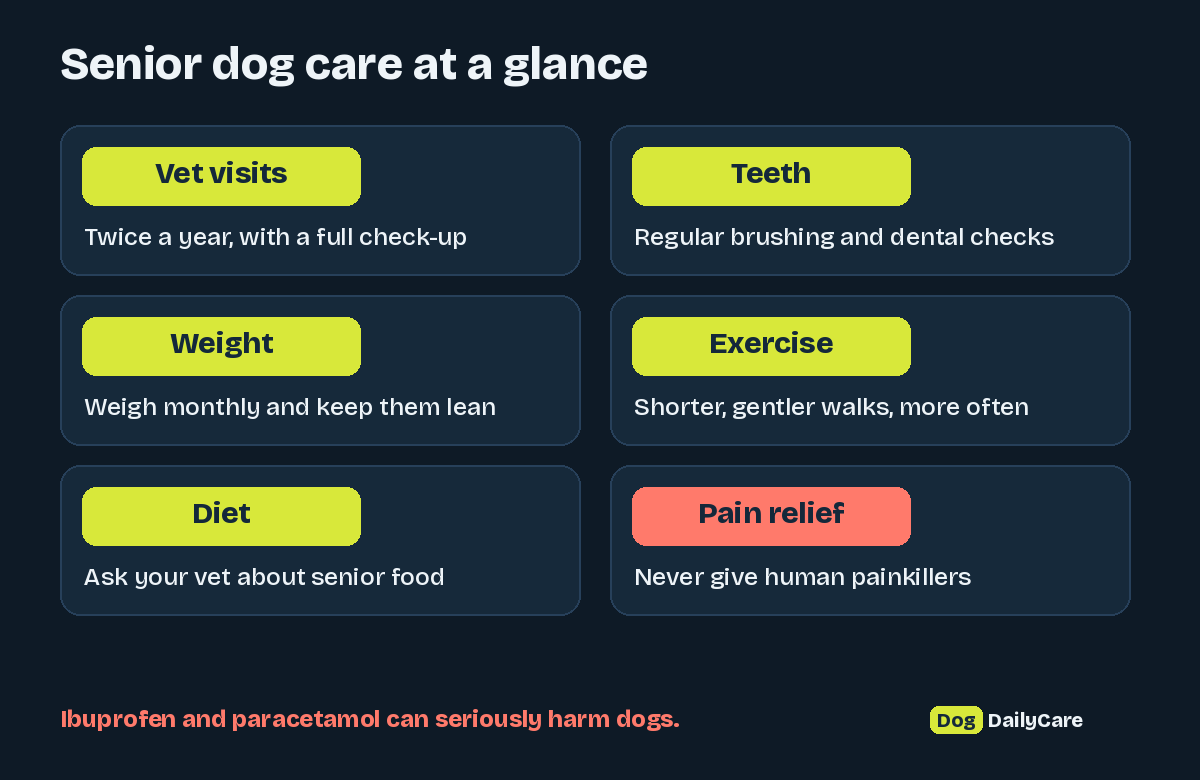
Book a check-up twice a year. Your vet may suggest:
- A full physical exam, including the heart, joints, eyes and teeth
- Blood and urine tests to check the kidneys, liver and thyroid
- Weight monitoring
- A pain and mobility check
- A review of diet, vaccines and parasite prevention
Finding problems early gives you more options and often makes treatment easier.
Arthritis and joint comfort
Arthritis is very common in older dogs and often goes unnoticed because dogs hide pain. Look for stiffness, slowing down, licking at joints, trouble standing, or a reluctance to play.
- Keep your dog lean. Extra weight puts more stress on sore joints.
- Choose low-impact exercise, such as gentle walks and swimming.
- Ask your vet about pain relief and joint supplements.
Never give your dog human painkillers. Ibuprofen, paracetamol and similar medicines can seriously harm dogs. Your vet can prescribe medicine that is safe for them.
Making home comfortable

- A supportive bed: thick and orthopaedic if possible, away from draughts
- Non-slip floors: rugs or runners on tiles and wood
- Ramps and steps: to help with the car, sofa or stairs
- Easy access: keep food, water and toilet spots close by
- Warmth: a cosy spot, and a coat in cold weather
- Gentle routine: short walks and calm, regular days
Keep nails trimmed, because long nails affect grip and balance. Using a harness or towel sling can help you support a dog with weak back legs.
Feeding an older dog
Older dogs’ needs change. Some gain weight because they move less, while others lose weight or muscle.
- Weigh your dog every month and check their body shape. You should be able to feel the ribs.
- Ask your vet whether a senior diet suits your dog. Don’t automatically cut protein, because many older dogs need good-quality protein to keep muscle.
- Offer smaller meals more often if appetite drops.
- Make sure fresh water is always available.
- If your dog suddenly stops eating, loses weight or drinks much more than usual, see your vet.
You can use our feeding calculator on the homepage as a starting point, and adjust with your vet’s advice.
Exercise and play
Older dogs still need to move, because it keeps joints flexible and muscles strong.
- Go for shorter, more frequent walks at a gentle pace.
- Choose soft surfaces and avoid too much jumping.
- Let your dog set the pace and rest when they want to.
- Keep their mind active with sniff walks, puzzle feeders and short, easy training sessions.
Dental care
Dental disease is very common in older dogs and can cause pain, infection and trouble eating. Keep brushing their teeth, and ask your vet about a dental check. Bad breath, red gums, drooling or dropping food can be signs of a problem.
Confusion and memory changes
Some older dogs develop a condition similar to dementia. Signs include pacing, getting stuck in corners, staring, sleeping more in the day and being awake at night, and forgetting house training. These signs can also come from pain or other illnesses, so see your vet. Treatment, a steady routine and mental stimulation can help.
Quality of life and difficult decisions
Eventually, every owner faces hard questions about their dog’s quality of life. Your vet can help you judge how your dog is doing, using a quality-of-life scale that looks at pain, appetite, mobility, hygiene, happiness and good days compared with bad ones. Talk openly with your vet, and take your time. You know your dog best, and you don’t have to decide alone.
Common questions
How long do dogs live?
It varies a lot by breed and size. Small dogs often live into their teens, while giant breeds have shorter lives. Good care and a healthy weight help.
Should I get a second dog to keep my older dog company?
Not always. Some older dogs enjoy company, while others find a lively puppy stressful. Think about your dog’s personality and ask your vet.
Is it normal for older dogs to sleep more?
Yes, to a point. But a sudden change, or a dog that seems uninterested in everything, needs a vet check.
Can older dogs still learn new things?
Yes. Short, rewarding sessions are good mental exercise at any age.
When to talk to your vet
Speak to your vet about any new limp, loss of appetite, weight change, breathing change, increased thirst, accidents, lumps or confusion. This guide is general information and does not replace veterinary advice.
Next, see our guides on dog health and vaccines and how much exercise a dog needs.