
You’ve got a muddy, smelly dog and the dog shampoo bottle is empty. Before you reach for whatever is in the bathroom cabinet, it’s worth knowing what is safe and what isn’t. This guide shows you how to wash a dog without dog shampoo, which alternatives work in a pinch, and what you should never use.
Why dog shampoo matters
A dog’s skin is different from ours. It is thinner and has a different pH, so products made for people can dry or irritate it and, over time, upset the skin’s natural barrier. That’s why vets recommend shampoo made for dogs for regular baths.
For a one-off emergency, though, there are safe ways to get your dog clean until you can restock.
The ASPCA says a shampoo made for pets is best, because some human shampoos contain fragrances or other substances that can irritate a dog’s skin.
Safe options if you have no dog shampoo
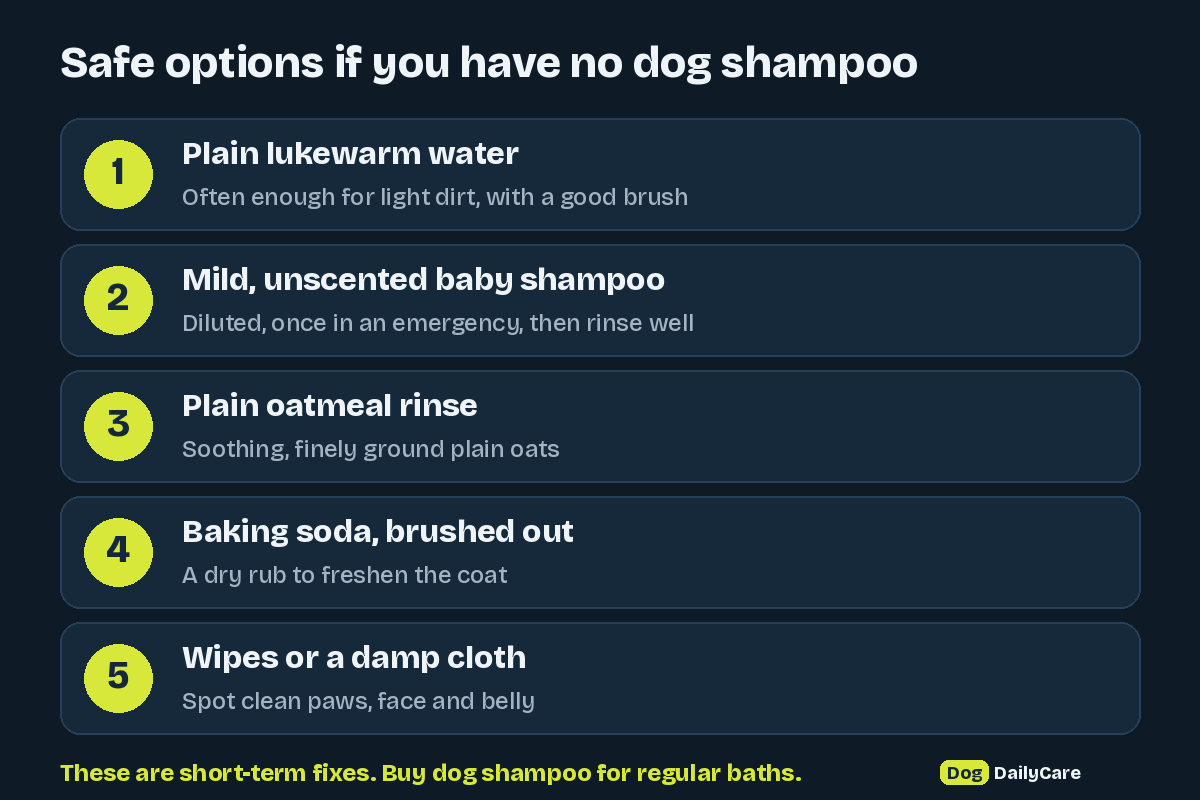
1. Plain lukewarm water and a good brush
For light dirt, this is often enough. Brush out dry mud first, then rinse with lukewarm water. Water alone removes much of the dirt without stripping the coat.
2. A small amount of mild, unscented baby shampoo
Many owners use a tiny amount of diluted, fragrance-free baby shampoo once in an emergency. It is gentler than most human shampoos, but it isn’t made for dog skin, so don’t use it regularly. Rinse very thoroughly, and ask your vet if your dog has skin problems.
3. A plain oatmeal rinse or paste
Plain, finely ground oats mixed with water can soothe itchy skin and gently lift dirt. Use plain oats with no flavour or sugar. Rinse well afterwards.
4. Baking soda, brushed out
For a smelly coat and no time for a bath, rub a little baking soda into the dry coat, avoiding the face, and brush it out. It helps freshen the coat, but it isn’t a replacement for washing. Skip it on sore or irritated skin.
5. Wipes or a damp cloth
Use dog-safe wipes or a damp cloth to clean paws, faces and bellies. This is often the easiest option for small messes.
What not to use on your dog
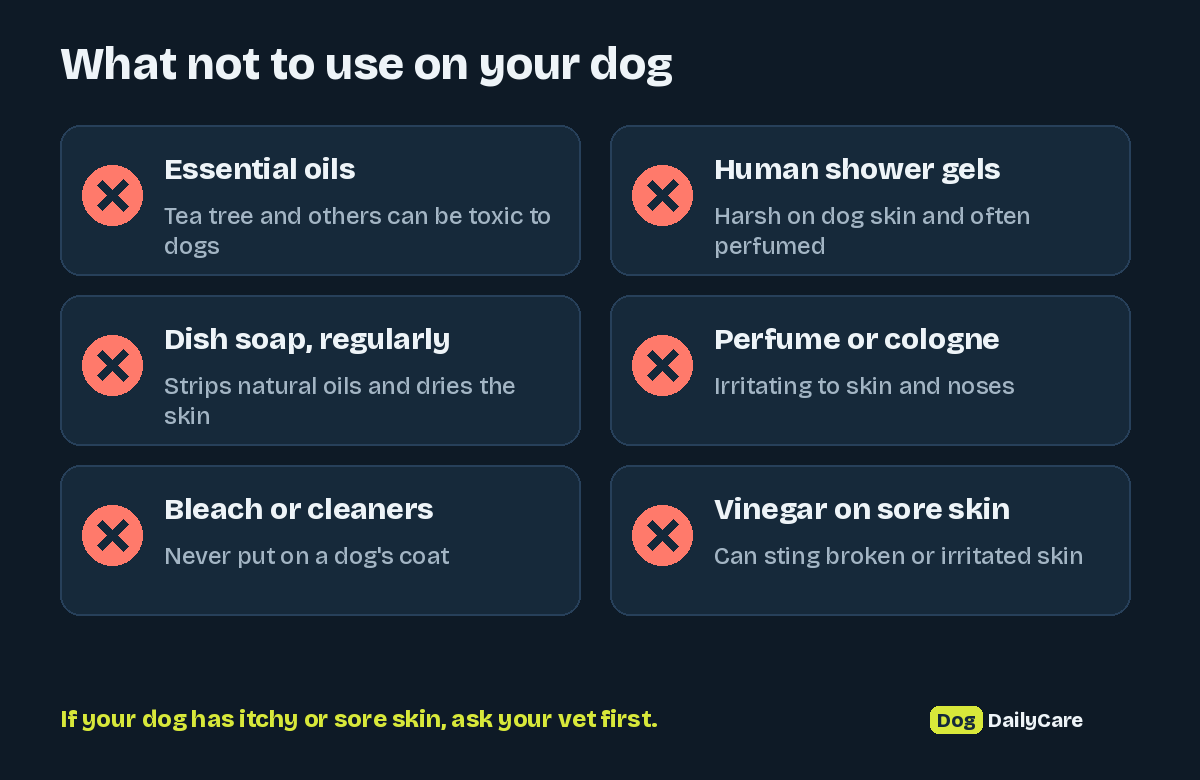
- Essential oils: tea tree oil and some others can be toxic to dogs.
- Human shower gels and body washes: harsh on dog skin and often perfumed.
- Dish soap, regularly: it strips natural oils and dries the skin. Use it only for a one-off problem, such as heavy grease, and rinse very thoroughly.
- Perfume or cologne: irritating to skin and noses.
- Bleach or household cleaners: never put these on a dog.
- Vinegar on sore skin: it can sting broken or irritated skin.
If your dog has itchy, red or sore skin, or if they’ve rolled in something unknown, call your vet before trying any home remedy.
How to wash your dog without dog shampoo, step by step

- Brush. Remove tangles, loose hair and dry dirt first.
- Wet. Use lukewarm water on the body, and keep it away from the eyes and ears.
- Use a mild option. If you use baby shampoo or oatmeal, use a small, diluted amount and work it in gently.
- Rinse well. Keep rinsing until there are no suds or residue left, because leftovers can irritate skin.
- Dry. Towel dry well, and keep your dog warm until fully dry.
- Restock. Buy a shampoo made for dogs before the next bath.
Never leave your dog alone in the bath or sink. If you don’t have a bathtub, see our guide on how to bathe a dog without a bathtub.
What about homemade dog shampoo?
You’ll find many recipes online, but they vary in safety, and some include ingredients that can irritate skin or be harmful if licked. For regular baths, a proper dog shampoo is a safer choice. If you want a gentler or natural option, many dog shampoos are made with oatmeal and mild ingredients, and your vet can recommend one.
Choosing a good dog shampoo
- Pick one made for dogs, and for your dog’s coat and skin type.
- Choose mild, fragrance-free products if your dog has sensitive skin.
- Ask your vet about a medicated shampoo for skin conditions.
- Check the label for age guidance, especially for puppies.
How often should you bathe your dog?
Most dogs need a bath every 4 to 8 weeks, depending on their coat, activity and skin. Bathing too often can dry the skin. Read our dog grooming guide for a full routine.
Common questions
Can I use human shampoo on a dog?
It’s best not to. Human shampoos are made for human skin and can dry or irritate a dog’s skin. In a real emergency, a small amount of mild, unscented baby shampoo is usually the least harmful, but use it once and then switch to dog shampoo.
Can I use dish soap to wash my dog?
Only occasionally, for something very greasy. Dish soap strips natural oils and can dry the skin, so it shouldn’t be used for regular washing. Rinse well.
Is baby shampoo safe for dogs?
A small, diluted amount of mild, fragrance-free baby shampoo is a common short-term fix, but it isn’t made for dog skin. Don’t use it regularly, and ask your vet if your dog has skin problems.
How can I make my dog smell better without a bath?
Brush them well, wipe the coat with a damp cloth or dog wipes, and wash their bedding. If the smell is strong or doesn’t go away after a bath, it may be a skin, ear or dental problem, so see your vet.
Can I wash my puppy without puppy shampoo?
Warm water and a gentle wipe-down are usually safest. Ask your vet before using anything else, because puppies have sensitive skin.
When to talk to your vet
See your vet if your dog has itchy, red or flaky skin, hair loss, a strong smell that doesn’t go away, or if they have rolled in something harmful or unknown. This guide is general information and does not replace veterinary advice.
Next, see our guides on how to bathe a dog without a bathtub and dog grooming.