
Grooming is more than keeping your dog looking tidy. Regular brushing, bathing and nail care keep your dog comfortable, and they give you a weekly chance to spot lumps, skin problems or sore spots early. This guide shows you a simple routine you can do at home.
How often should you groom your dog?
How often depends on your dog’s coat, activity and health. Use this as a starting point.
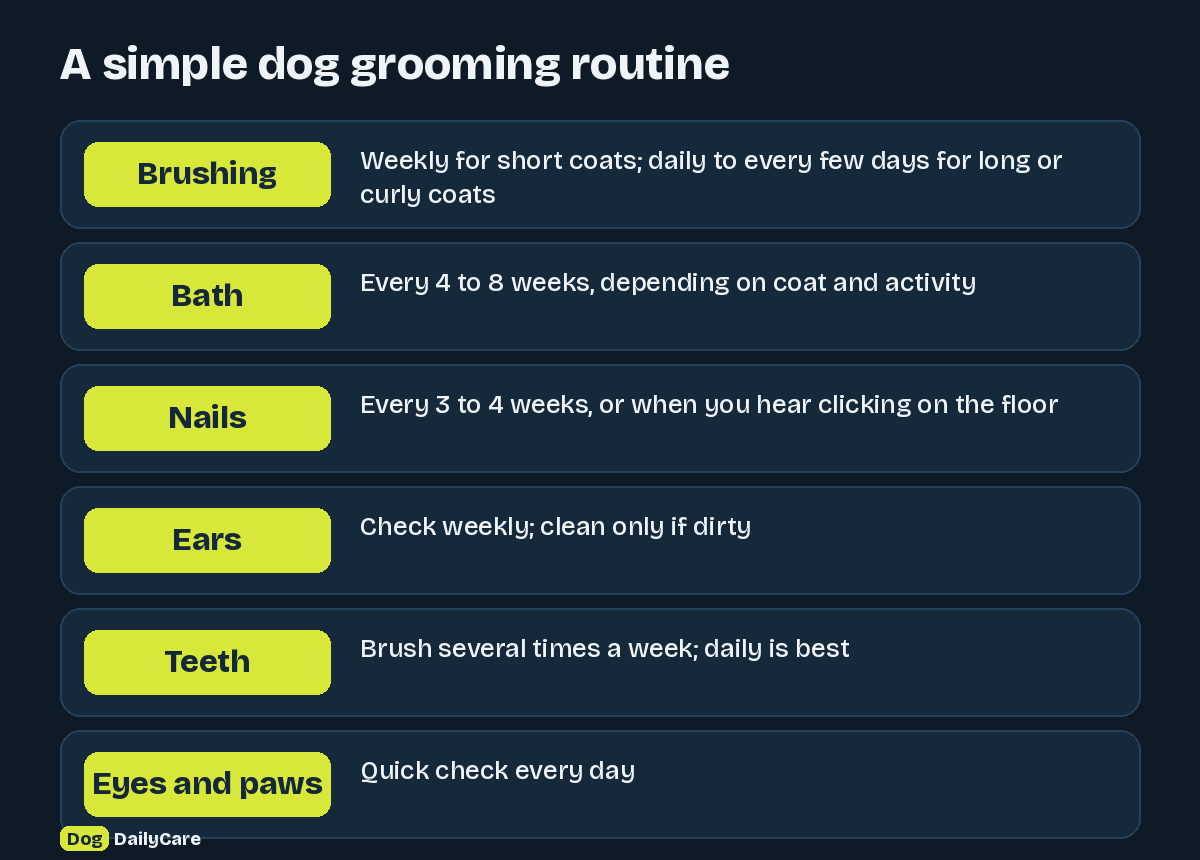
- Brushing: weekly for short coats, and daily to every few days for long or curly coats
- Bath: every 4 to 8 weeks
- Nails: every 3 to 4 weeks, or when you hear clicking on the floor
- Ears: check weekly, clean only if dirty
- Teeth: brush several times a week, daily is best
- Eyes and paws: a quick check every day
Brushing
Brushing removes loose hair and dirt, spreads natural oils through the coat and prevents painful mats.
- Short coats (such as Labradors and Beagles): a rubber brush or grooming mitt once a week.
- Long or double coats (such as Golden Retrievers and Huskies): a slicker brush and a comb, several times a week.
- Curly or woolly coats (such as Poodles): brush daily or every other day, as these coats mat quickly.
Brush in the direction the hair grows, and be gentle around the ears, armpits and behind the legs, where mats form first. If you find a mat, don’t pull it out. Hold the hair at the base so it doesn’t pull the skin, and use your fingers or a comb to tease it apart. For tight or large mats, ask a groomer, because cutting them yourself risks cutting the skin.
Bathing
Most dogs only need a bath every 4 to 8 weeks. Bathing too often can dry out the skin.
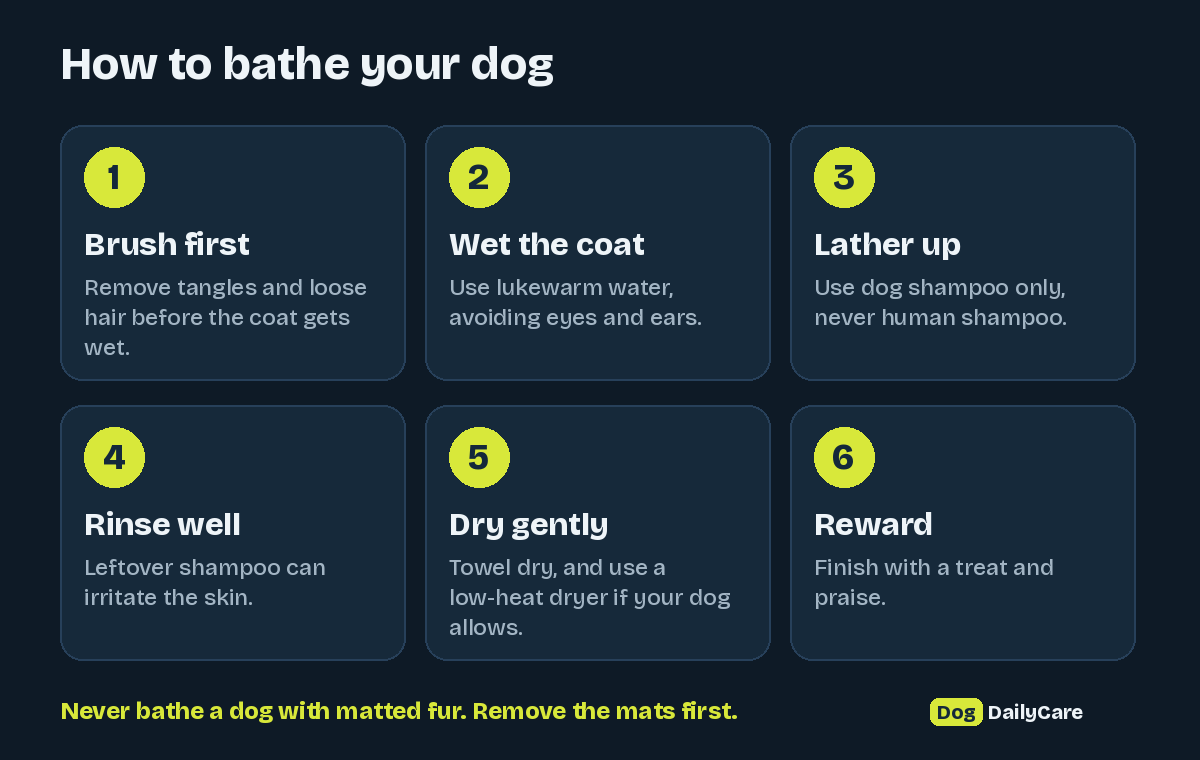
- Brush first. Remove tangles and loose hair before the coat gets wet, because wet mats get tighter.
- Wet the coat. Use lukewarm water and keep it away from the eyes and inside the ears.
- Lather up. Use shampoo made for dogs. Human shampoo is not suited to a dog’s skin.
- Rinse well. Leftover shampoo can irritate the skin.
- Dry gently. Towel dry, and use a dryer on a low, cool setting if your dog accepts it. Dry skin folds and ears well.
- Reward. Finish with a treat and praise so baths feel positive.
Never bathe a dog with matted fur before the mats are out, because water makes them worse. If your dog has itchy, red or flaky skin, ask your vet before using any medicated shampoo.
Nail care
Long nails can make walking uncomfortable and can change the way a dog stands. A good rule is to trim when you can hear nails clicking on hard floors.
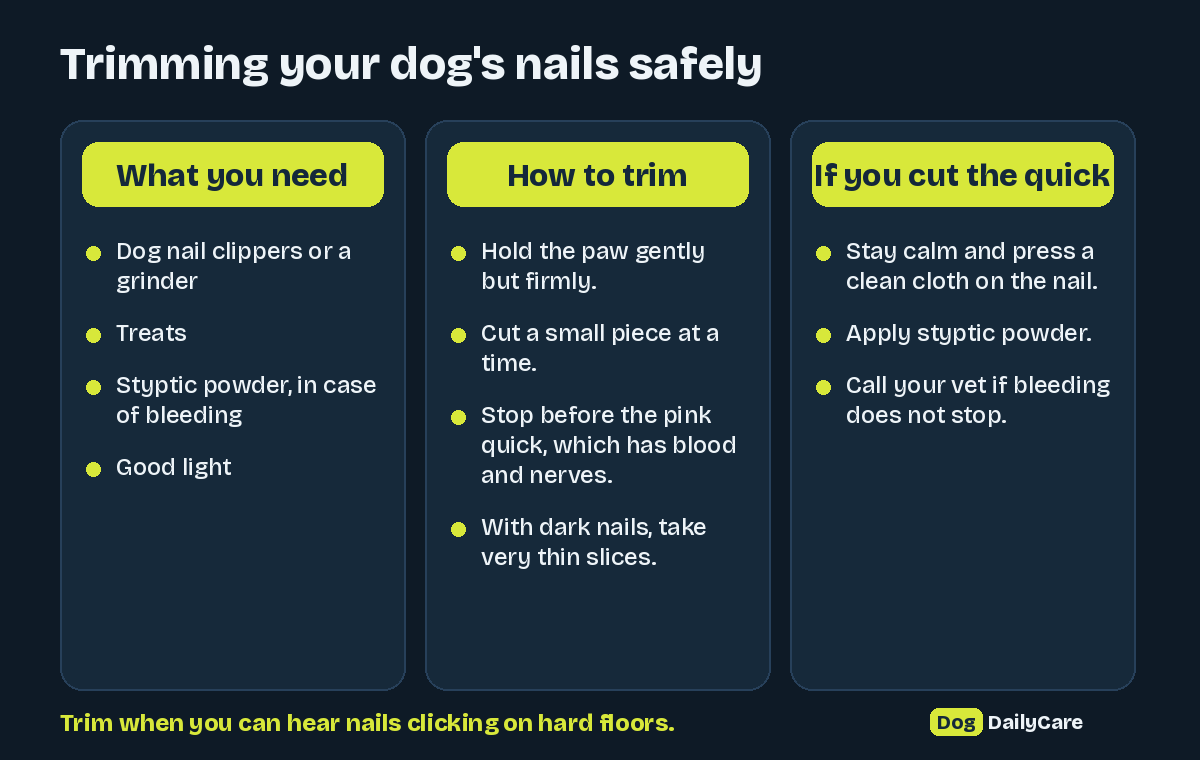
- What you need: dog nail clippers or a grinder, treats and styptic powder (which stops bleeding) in case you cut too far.
- How to trim: hold the paw gently but firmly and cut a small piece at a time. Stop before the pink “quick” inside the nail, which contains blood vessels and nerves. On dark nails you can’t see the quick, so take very thin slices.
- If you cut the quick: stay calm, press a clean cloth on the nail and apply styptic powder. Call your vet if bleeding doesn’t stop.
If your dog hates having their feet handled, start by just touching their paws and giving treats, then build up slowly. A vet or groomer can also trim nails for you.
Ears and eyes
- Ears: check once a week. Healthy ears are clean, pale pink and have little smell. If you see redness, a bad smell, lots of dark discharge, or your dog is scratching or shaking their head, see your vet. Only clean ears with a cleaner made for dogs, and never push cotton buds deep into the ear.
- Eyes: wipe away small amounts of crust from the corners with a damp, soft cloth. Redness, cloudiness or lots of discharge needs a vet check.
Dental care
Dental problems are very common in dogs and can lead to pain and infection.
- Brush your dog’s teeth several times a week, ideally daily, with a soft dog toothbrush and toothpaste made for dogs.
- Never use human toothpaste. Some contain ingredients, such as xylitol, that are harmful to dogs.
- Start slowly by letting your dog lick the toothpaste, then brush a few teeth at a time.
- Dental chews and toys can help, but they don’t replace brushing.
Bad breath that suddenly gets worse, red gums, a loose tooth or reluctance to eat are signs to see your vet.
Do you need a professional groomer?
Many dogs can be groomed at home. A professional groomer is useful for breeds that need regular clipping (such as Poodles and Schnauzers), for badly matted coats, and if your dog is anxious or hard to handle. Most owners using a groomer go every 6 to 8 weeks, but ask your groomer what suits your dog.
Common questions
Can I use human shampoo on my dog?
It’s best not to. A dog’s skin has a different pH from ours, and human products can dry and irritate it. Choose a shampoo made for dogs.
Do I need to brush a short-haired dog?
Yes, but less often. A weekly brush removes loose hair, spreads oils and gives you a chance to check the skin.
How do I get my dog to stay calm during grooming?
Keep sessions short, use treats, and finish before your dog gets stressed. Let your dog sniff the tools first, and build up gradually.
Should I shave my dog in summer?
Usually not, especially for double-coated breeds. Their coat helps regulate temperature and protects the skin from sunburn. Ask your vet or groomer first.
When to talk to your vet
See your vet if you notice lumps, sores, hair loss, constant scratching, a bad smell from the skin or ears, or any sudden change in your dog’s coat. This guide is general information and does not replace veterinary advice.
Next, see our guides on feeding your dog and Puppy Training.
1 thought on “Dog Grooming at Home: Brushing, Baths, Nails, Ears and Teeth”
Comments are closed.