
The first few months with a puppy shape the dog they become. The good news is that you don’t need special equipment or long sessions. You need a routine, patience and a pocket full of small treats. This guide covers house training, crate routines, the first three commands, and how to socialise your puppy safely.
House training your puppy
Puppies don’t know where to go to the toilet. They learn it through repetition and rewards, and accidents are part of the process.
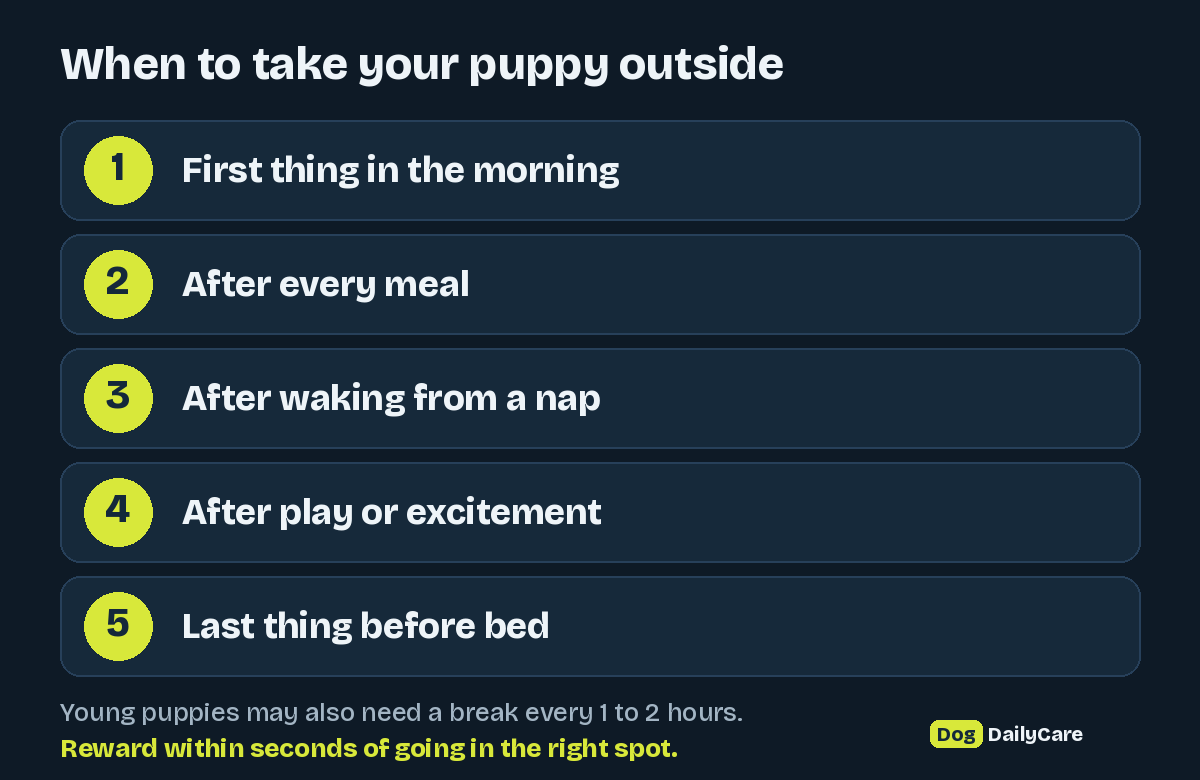
Take your puppy outside at these times:
- First thing in the morning
- After every meal
- After waking from a nap
- After play or excitement
- Last thing before bed
As a rough guide, a puppy can hold their bladder for about one hour for each month of age, so a three-month-old may need a break every two to three hours. Very young puppies often need to go more often.
The steps
- Take your puppy to the same spot each time, so the smell reminds them what to do.
- Stay calm and quiet while they sniff around.
- The moment they finish, praise them and give a treat. Rewarding within a few seconds is what makes it stick.
- Bring them back inside only after they have gone, then play.
When accidents happen
Clean the spot with an enzyme cleaner, because ordinary cleaners can leave a smell that draws your puppy back. Never punish or rub their nose in it. Punishment teaches puppies to hide when they need to go, not to go outside.
Crate routine
A crate can give your puppy a safe place to rest and helps with house training, because most puppies avoid soiling the area where they sleep.
- Choose a crate big enough to stand, turn around and lie down in, but not much bigger.
- Make it comfortable with a soft bed and a safe chew toy.
- Feed meals inside the crate so it becomes a happy place.
- Build up the time slowly, starting with a few minutes.
- Never use the crate as punishment.
Don’t leave a young puppy in a crate for long stretches. If you are away for several hours, ask a friend to help or arrange a puppy-safe space with water and a toilet area.
First commands to teach
Start with three simple cues. Keep sessions to 5 to 10 minutes, a few times a day, and end while your puppy is still keen.
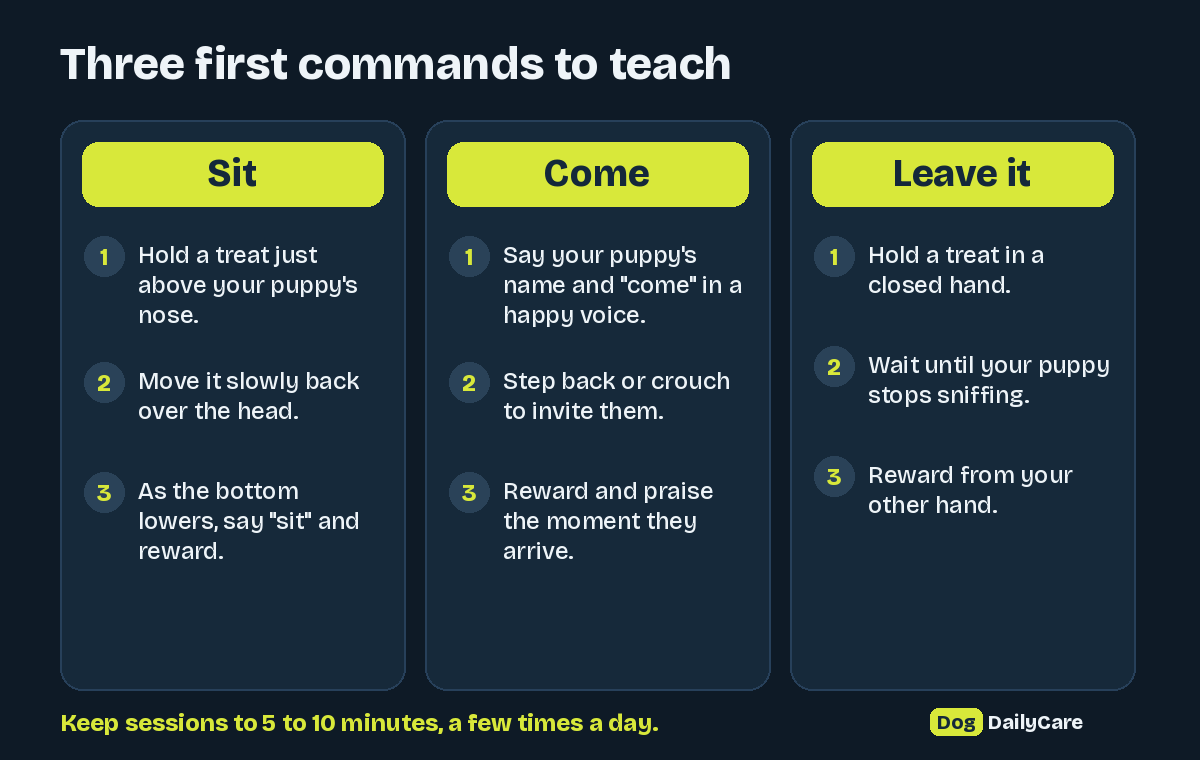
Sit
- Hold a treat just above your puppy’s nose.
- Move it slowly back over their head.
- As their bottom lowers, say “sit” and give the treat.
Come
- Say your puppy’s name and “come” in a happy voice.
- Step back or crouch down to invite them.
- Reward and praise the moment they arrive. Never call your puppy to you to scold them.
Leave it
- Hold a treat in a closed hand.
- Wait until your puppy stops sniffing and licking.
- Reward them with a treat from your other hand.
Say each cue once, then help your puppy get it right. Repeating the word over and over teaches them to ignore it.
Socialisation: the most important window
Puppies learn what is safe and normal most easily between about 3 and 16 weeks of age. Gentle, positive experiences during this time help prevent fear and anxiety later.
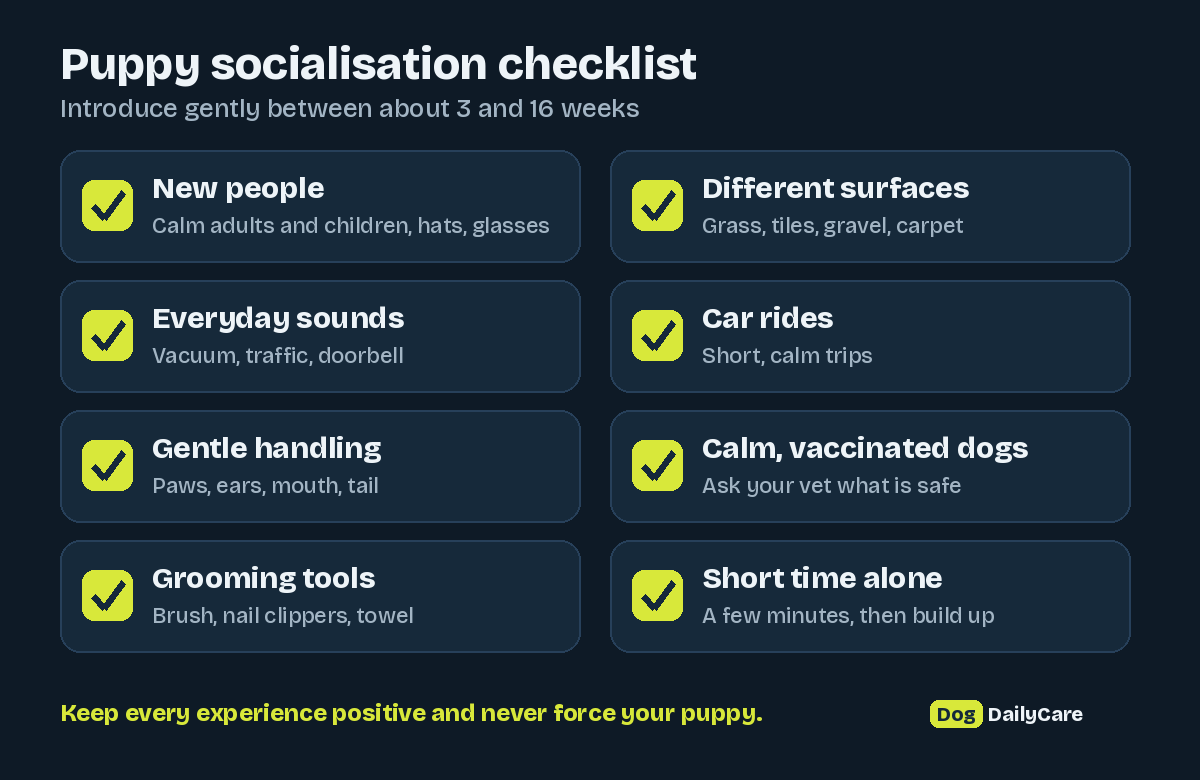
Introduce your puppy to:
- New people, including children (supervised and calm)
- Different surfaces such as grass, tiles and gravel
- Everyday sounds like the vacuum cleaner, traffic and the doorbell
- Short car rides
- Gentle handling of paws, ears and mouth
- Calm, vaccinated dogs
- Grooming tools
- Short periods alone
Let your puppy move at their own pace and never force an experience. If they seem scared, increase the distance and make it fun with treats. Ask your vet which places are safe before your puppy has finished their vaccinations, because some areas carry a risk of disease.
Biting and chewing
Puppy mouthing is normal, because they explore with their mouths and are teething. Here is how to handle it:
- When teeth touch skin, calmly stop the game and give your puppy a chew toy instead.
- Offer a variety of safe chew toys, and keep valuables out of reach.
- Avoid rough games with your hands, which teach your puppy that skin is a toy.
- If they get overexcited, give them a short, calm break.
Be consistent
The most useful rule in puppy training is consistency. Everyone in the home should use the same cue words and the same rules. If one person lets the puppy on the sofa and another doesn’t, your puppy gets confused.
Common questions
When should I start training my puppy?
From the day you bring them home. Start with house training, crate comfort and gentle handling, and add commands as your puppy settles in.
How long does house training take?
Many puppies are mostly reliable within a few weeks to a few months, but it varies by breed, age and how consistent you are. Small breeds often take longer.
Do I need to use treats?
Treats are very effective for teaching new skills. Use small, soft pieces, and take them out of your puppy’s daily food allowance so they don’t gain weight.
Is a trainer worth it?
A reward-based puppy class is helpful for socialisation and for teaching you the skills. If your puppy shows ongoing fear, aggression or severe anxiety, ask your vet for advice or a qualified trainer.
When to talk to your vet
Speak to your vet about vaccinations before taking your puppy to public places, and if house training problems suddenly appear, such as frequent urination or accidents after your puppy was doing well, because this can have a medical cause. This guide is general information and does not replace professional advice.
Next, see our guides on feeding your dog and dog health and vaccines.
1 thought on “Puppy Training Basics: House Training, Crate Routine and First Commands”
Comments are closed.