
Feeding looks simple until you stand in front of a bag of dog food with a chart that says “1 to 2 cups”. How much is right for your dog? The honest answer is that it depends on your dog’s weight, age, activity and the food itself. This guide shows you how to work out a sensible starting amount, how to adjust it, and which foods to keep away from your dog.
How often should you feed a dog?
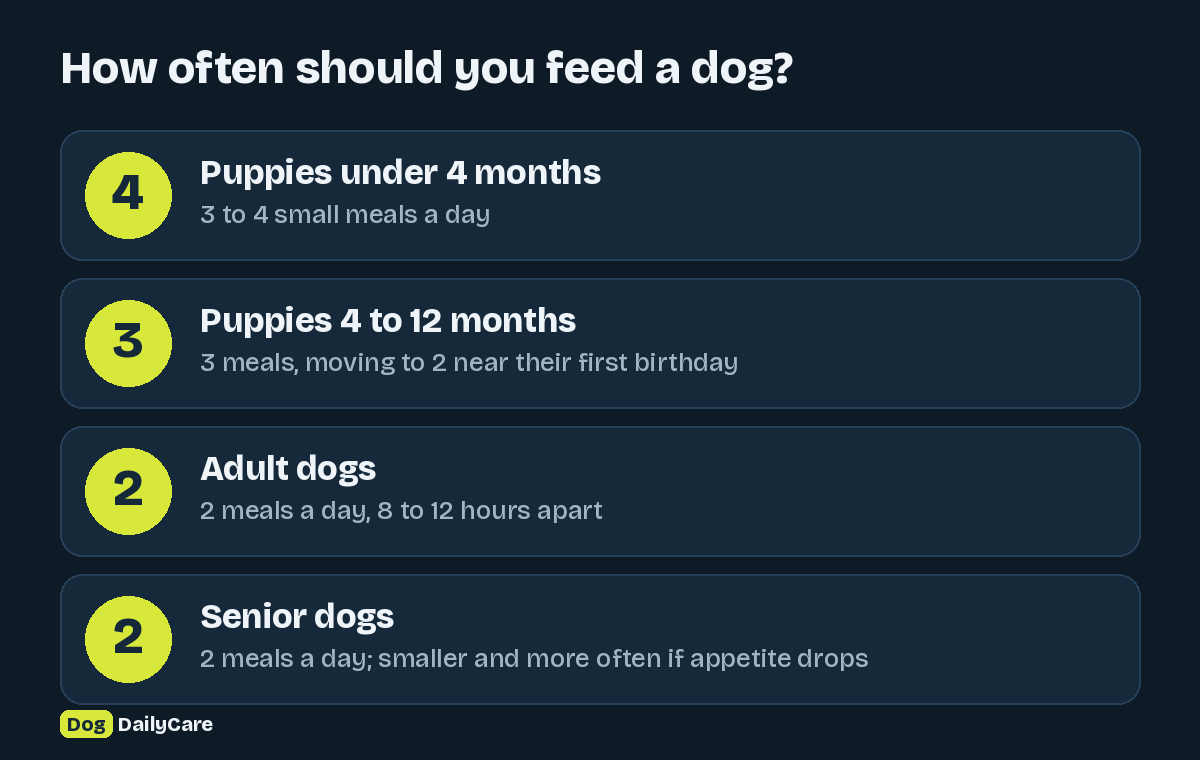
- Puppies under 4 months: three to four small meals a day.
- Puppies 4 to 12 months: three meals, moving to two as they approach their first birthday.
- Adult dogs: two meals a day, about 8 to 12 hours apart.
- Senior dogs: two meals a day, sometimes smaller and more often if appetite drops.
Very small puppies should not go long between meals, because they can drop their blood sugar. Ask your vet for the right schedule for toy breeds.
How many calories does a dog need?
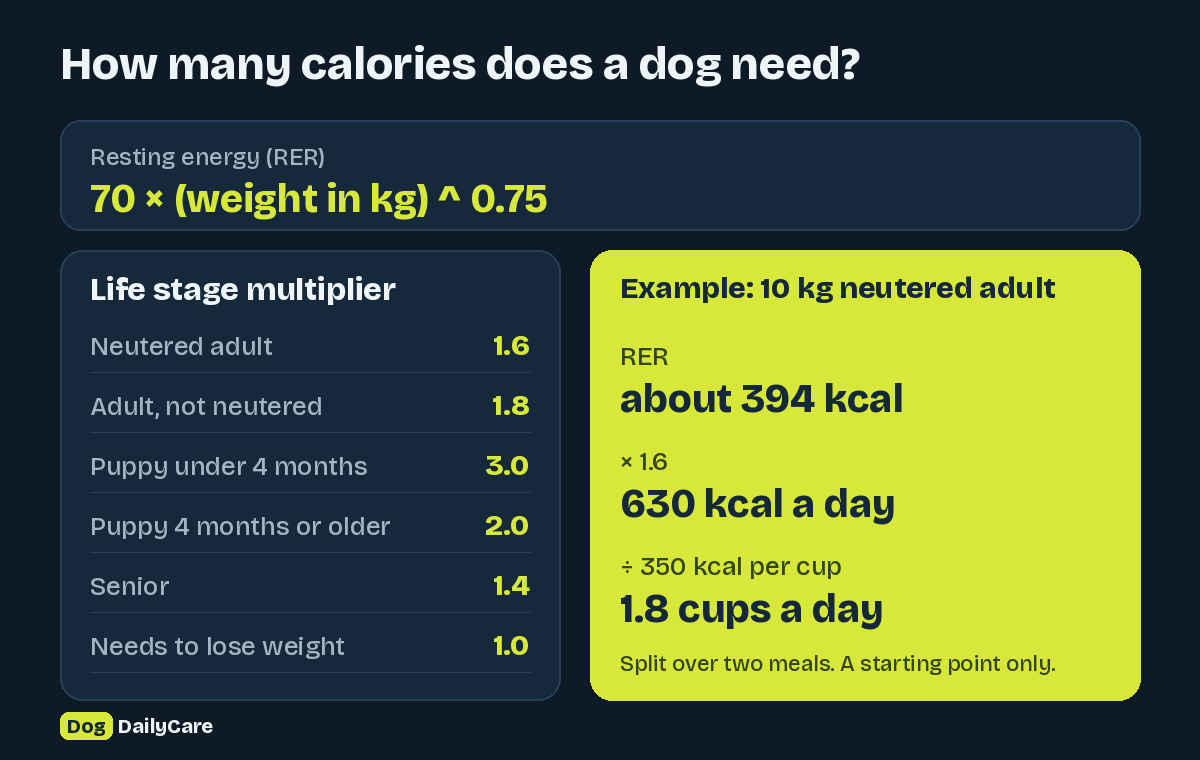
Vets often start with the resting energy requirement (RER), the calories a dog needs just to stay alive. The usual formula is:
RER = 70 × (body weight in kg) raised to the power of 0.75
Then multiply by a factor for life stage:
- Neutered adult: about 1.6
- Adult, not neutered: about 1.8
- Puppy under 4 months: about 3.0
- Puppy 4 months or older: about 2.0
- Senior: about 1.4
- Needs to lose weight: about 1.0, using the ideal weight
Example: a neutered adult dog weighing 10 kg has an RER of about 394 calories. Multiply by 1.6 and you get roughly 630 calories a day. If the food has 350 calories per cup, that is about 1.8 cups a day, split over two meals.
You can skip the maths with our free feeding calculator on the homepage. Treat every number as a starting point. Active dogs may need more and sofa lovers less.
How to read the food label
- Look for a statement that the food is “complete and balanced” for your dog’s life stage (puppy, adult or all life stages).
- Find the calories per cup or per kilogram. This varies a lot between brands, which is why cup amounts are not universal.
- Use the feeding chart on the bag as a guide, then adjust by your dog’s body condition.
How to tell if your dog is a healthy weight
The scale is only part of the answer. Check your dog’s body condition:
- You can feel the ribs easily under a thin layer of fat, without pressing hard.
- From above, you can see a waist behind the ribs.
- From the side, the belly tucks up behind the ribcage.
If you can’t feel the ribs, or the waist has disappeared, cut the daily amount by about 10 percent and recheck in two to three weeks. If the ribs are sharp and easy to see, talk to your vet before increasing food, because weight loss can have medical causes.
Treats and extras
Keep treats to about 10 percent of daily calories, and reduce meals slightly on days with lots of treats. Training treats should be pea-sized. Fresh water should always be available.
Foods that are unsafe for dogs
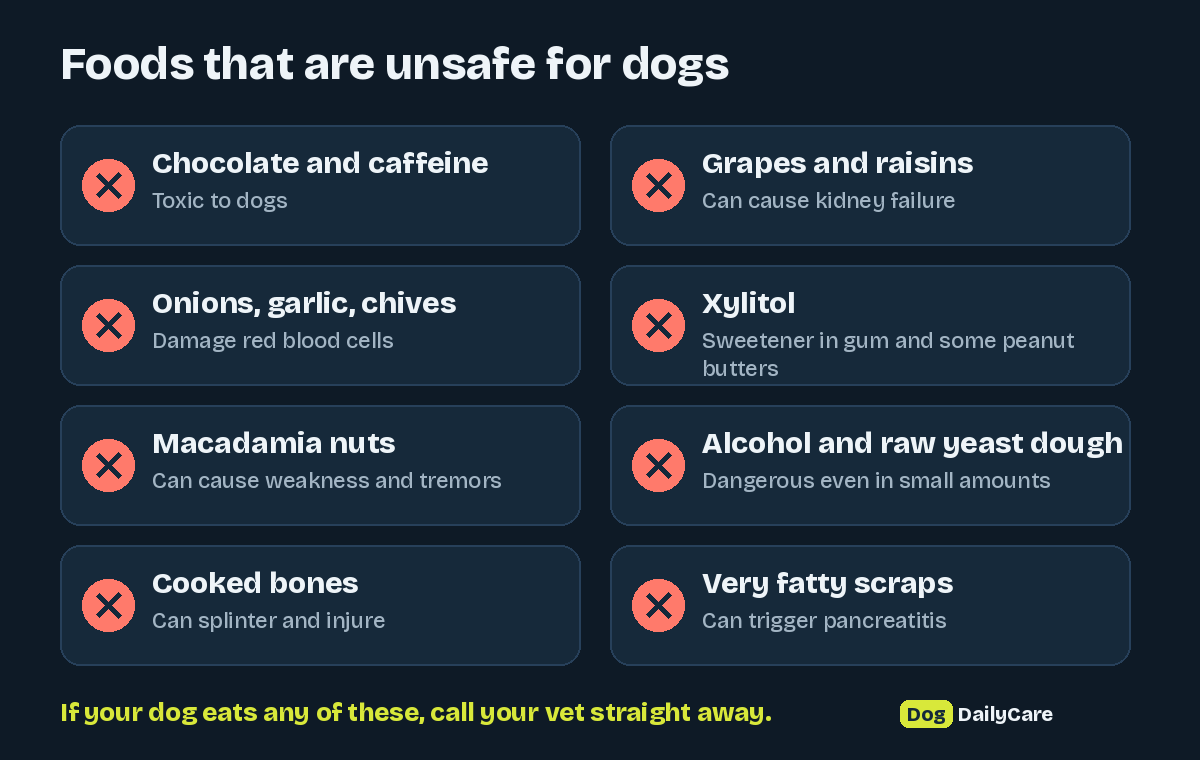
- Chocolate, coffee and other caffeine
- Grapes and raisins
- Onions, garlic and chives
- Xylitol, a sweetener in some gum, sweets and peanut butters
- Macadamia nuts
- Alcohol and raw yeast dough
- Cooked bones, which can splinter
- Very fatty scraps, which can trigger pancreatitis
If your dog eats any of these, call your vet or an animal poison helpline straight away. Don’t wait for symptoms.
How to switch dog foods safely
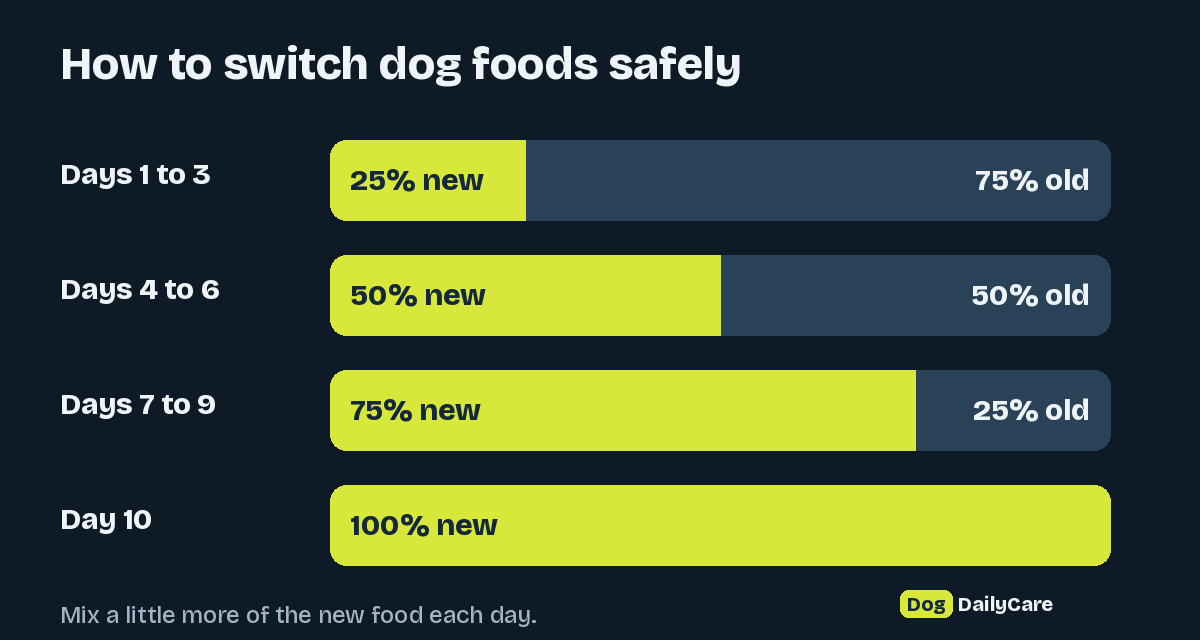
Change foods slowly over 7 to 10 days to avoid an upset stomach:
- Days 1 to 3: 25 percent new food, 75 percent old
- Days 4 to 6: 50 percent new, 50 percent old
- Days 7 to 9: 75 percent new, 25 percent old
- Day 10: 100 percent new food
Common questions
Is wet or dry food better?
Either can be complete and balanced. Dry food is convenient and keeps well. Wet food has more water and is often tastier, which helps fussy eaters. Many owners mix both.
Why is my dog always hungry?
Many dogs beg regardless of how much they have eaten. Check that portions match the guide above. If your dog is eating well but losing weight, or drinking much more than usual, see your vet.
Should I leave food out all day?
Scheduled meals let you spot appetite changes quickly and make weight easier to control. Most vets prefer measured meals.
When to talk to your vet
Speak to your vet if your dog stops eating for more than a day, gains or loses weight quickly, has long-lasting diarrhoea or vomiting, or has a health condition that needs a special diet. This guide is general information and does not replace veterinary advice.
Next, see our guides on puppy training and dog health and vaccines.